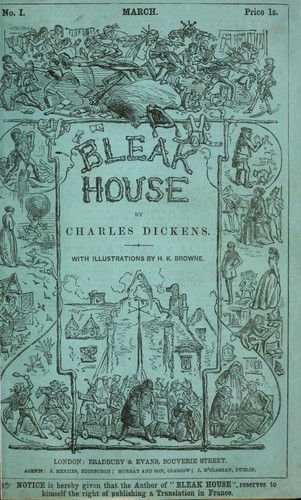
Public domain. Not under copyright: Dickens, Charles (d. 1870). Everyone credited died more than 50 years ago, outside Pakistan's life-plus-50 term, and Project Gutenberg lists the text as public domain. Newer translations or editions can carry separate rights. Source: Project Gutenberg
“Upon the whole, not so bad, sir,” said Mrs. Blinder; “but certainly not so many as would have been if their father’s calling had been different. Mr. Coavins gave a guinea, and the follerers made up a little purse. Some neighbours in the yard that had always joked and tapped their shoulders when he went by came forward with a little subscription, and—in general—not so bad. Similarly with Charlotte. Some people won’t employ her because she was a follerer’s child; some people that do employ her cast it at her; some make a merit of having her to work for them, with that and all her draw-backs upon her, and perhaps pay her less and put upon her more. But she’s patienter than others would be, and is clever too, and always willing, up to the full mark of her strength and over. So I should say, in general, not so bad, sir, but might be better.”
Mrs. Blinder sat down to give herself a more favourable opportunity of recovering her breath, exhausted anew by so much talking before it was fully restored. Mr. Jarndyce was turning to speak to us when his attention was attracted by the abrupt entrance into the room of the Mr. Gridley who had been mentioned and whom we had seen on our way up.
“I don’t know what you may be doing here, ladies and gentlemen,” he said, as if he resented our presence, “but you’ll excuse my coming in. I don’t come in to stare about me. Well, Charley! Well, Tom! Well, little one! How is it with us all to-day?”
He bent over the group in a caressing way and clearly was regarded as a friend by the children, though his face retained its stern character and his manner to us was as rude as it could be. My guardian noticed it and respected it.
“No one, surely, would come here to stare about him,” he said mildly.
“May be so, sir, may be so,” returned the other, taking Tom upon his knee and waving him off impatiently. “I don’t want to argue with ladies and gentlemen. I have had enough of arguing to last one man his life.”
“You have sufficient reason, I dare say,” said Mr. Jarndyce, “for being chafed and irritated—”
“There again!” exclaimed the man, becoming violently angry. “I am of a quarrelsome temper. I am irascible. I am not polite!”
“Not very, I think.”
“Sir,” said Gridley, putting down the child and going up to him as if he meant to strike him, “do you know anything of Courts of Equity?”
“Perhaps I do, to my sorrow.”
“To your sorrow?” said the man, pausing in his wrath, “if so, I beg your pardon. I am not polite, I know. I beg your pardon! Sir,” with renewed violence, “I have been dragged for five and twenty years over burning iron, and I have lost the habit of treading upon velvet. Go into the Court of Chancery yonder and ask what is one of the standing jokes that brighten up their business sometimes, and they will tell you that the best joke they have is the man from Shropshire. I,” he said, beating one hand on the other passionately, “am the man from Shropshire.”
“I believe I and my family have also had the honour of furnishing some entertainment in the same grave place,” said my guardian composedly. “You may have heard my name—Jarndyce.”
“Mr. Jarndyce,” said Gridley with a rough sort of salutation, “you bear your wrongs more quietly than I can bear mine. More than that, I tell you—and I tell this gentleman, and these young ladies, if they are friends of yours—that if I took my wrongs in any other way, I should be driven mad! It is only by resenting them, and by revenging them in my mind, and by angrily demanding the justice I never get, that I am able to keep my wits together. It is only that!” he said, speaking in a homely, rustic way and with great vehemence. “You may tell me that I over-excite myself. I answer that it’s in my nature to do it, under wrong, and I must do it. There’s nothing between doing it, and sinking into the smiling state of the poor little mad woman that haunts the court. If I was once to sit down under it, I should become imbecile.”
The passion and heat in which he was, and the manner in which his face worked, and the violent gestures with which he accompanied what he said, were most painful to see.
“Mr. Jarndyce,” he said, “consider my case. As true as there is a heaven above us, this is my case. I am one of two brothers. My father (a farmer) made a will and left his farm and stock and so forth to my mother for her life. After my mother’s death, all was to come to me except a legacy of three hundred pounds that I was then to pay my brother. My mother died. My brother some time afterwards claimed his legacy. I and some of my relations said that he had had a part of it already in board and lodging and some other things. Now mind! That was the question, and nothing else. No one disputed the will; no one disputed anything but whether part of that three hundred pounds had been already paid or not. To settle that question, my brother filing a bill, I was obliged to go into this accursed Chancery; I was forced there because the law forced me and would let me go nowhere else. Seventeen people were made defendants to that simple suit! It first came on after two years. It was then stopped for another two years while the master (may his head rot off!) inquired whether I was my father’s son, about which there was no dispute at all with any mortal creature. He then found out that there were not defendants enough—remember, there were only seventeen as yet!—but that we must have another who had been left out and must begin all over again. The costs at that time—before the thing was begun!—were three times the legacy. My brother would have given up the legacy, and joyful, to escape more costs. My whole estate, left to me in that will of my father’s, has gone in costs. The suit, still undecided, has fallen into rack, and ruin, and despair, with everything else—and here I stand, this day! Now, Mr. Jarndyce, in your suit there are thousands and thousands involved, where in mine there are hundreds. Is mine less hard to bear or is it harder to bear, when my whole living was in it and has been thus shamefully sucked away?”
Mr. Jarndyce said that he condoled with him with all his heart and that he set up no monopoly himself in being unjustly treated by this monstrous system.
“There again!” said Mr. Gridley with no diminution of his rage. “The system! I am told on all hands, it’s the system. I mustn’t look to individuals. It’s the system. I mustn’t go into court and say, ‘My Lord, I beg to know this from you—is this right or wrong? Have you the face to tell me I have received justice and therefore am dismissed?’ My Lord knows nothing of it. He sits there to administer the system. I mustn’t go to Mr. Tulkinghorn, the solicitor in Lincoln’s Inn Fields, and say to him when he makes me furious by being so cool and satisfied—as they all do, for I know they gain by it while I lose, don’t I?—I mustn’t say to him, ‘I will have something out of some one for my ruin, by fair means or foul!’ HE is not responsible. It’s the system. But, if I do no violence to any of them, here—I may! I don’t know what may happen if I am carried beyond myself at last! I will accuse the individual workers of that system against me, face to face, before the great eternal bar!”
His passion was fearful. I could not have believed in such rage without seeing it.
“I have done!” he said, sitting down and wiping his face. “Mr. Jarndyce, I have done! I am violent, I know. I ought to know it. I have been in prison for contempt of court. I have been in prison for threatening the solicitor. I have been in this trouble, and that trouble, and shall be again. I am the man from Shropshire, and I sometimes go beyond amusing them, though they have found it amusing, too, to see me committed into custody and brought up in custody and all that. It would be better for me, they tell me, if I restrained myself. I tell them that if I did restrain myself I should become imbecile. I was a good-enough-tempered man once, I believe. People in my part of the country say they remember me so, but now I must have this vent under my sense of injury or nothing could hold my wits together. It would be far better for you, Mr. Gridley,’ the Lord Chancellor told me last week, ‘not to waste your time here, and to stay, usefully employed, down in Shropshire.’ ‘My Lord, my Lord, I know it would,’ said I to him, ‘and it would have been far better for me never to have heard the name of your high office, but unhappily for me, I can’t undo the past, and the past drives me here!’ Besides,” he added, breaking fiercely out, “I’ll shame them. To the last, I’ll show myself in that court to its shame. If I knew when I was going to die, and could be carried there, and had a voice to speak with, I would die there, saying, ‘You have brought me here and sent me from here many and many a time. Now send me out feet foremost!’”
His countenance had, perhaps for years, become so set in its contentious expression that it did not soften, even now when he was quiet.
“I came to take these babies down to my room for an hour,” he said, going to them again, “and let them play about. I didn’t mean to say all this, but it don’t much signify. You’re not afraid of me, Tom, are you?”
“No!” said Tom. “You ain’t angry with ME.”
“You are right, my child. You’re going back, Charley? Aye? Come then, little one!” He took the youngest child on his arm, where she was willing enough to be carried. “I shouldn’t wonder if we found a ginger-bread soldier downstairs. Let’s go and look for him!”
He made his former rough salutation, which was not deficient in a certain respect, to Mr. Jarndyce, and bowing slightly to us, went downstairs to his room.
Be the first to comment.