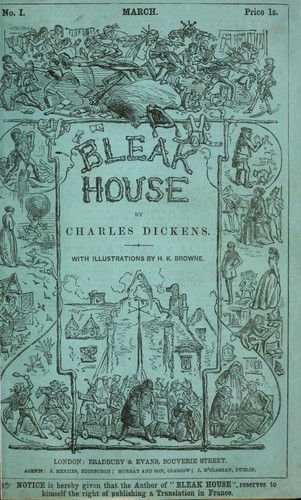
Public domain. Not under copyright: Dickens, Charles (d. 1870). Everyone credited died more than 50 years ago, outside Pakistan's life-plus-50 term, and Project Gutenberg lists the text as public domain. Newer translations or editions can carry separate rights. Source: Project Gutenberg
“No,” said I. “No, indeed! Be assured that he does not!” And I told her what he had related to me as his knowledge of my story. “But he is so good and sensible,” said I, “that perhaps if he knew—”
My mother, who until this time had made no change in her position, raised her hand up to my lips and stopped me.
“Confide fully in him,” she said after a little while. “You have my free consent—a small gift from such a mother to her injured child!—but do not tell me of it. Some pride is left in me even yet.”
I explained, as nearly as I could then, or can recall now—for my agitation and distress throughout were so great that I scarcely understood myself, though every word that was uttered in the mother’s voice, so unfamiliar and so melancholy to me, which in my childhood I had never learned to love and recognize, had never been sung to sleep with, had never heard a blessing from, had never had a hope inspired by, made an enduring impression on my memory—I say I explained, or tried to do it, how I had only hoped that Mr. Jarndyce, who had been the best of fathers to me, might be able to afford some counsel and support to her. But my mother answered no, it was impossible; no one could help her. Through the desert that lay before her, she must go alone.
“My child, my child!” she said. “For the last time! These kisses for the last time! These arms upon my neck for the last time! We shall meet no more. To hope to do what I seek to do, I must be what I have been so long. Such is my reward and doom. If you hear of Lady Dedlock, brilliant, prosperous, and flattered, think of your wretched mother, conscience-stricken, underneath that mask! Think that the reality is in her suffering, in her useless remorse, in her murdering within her breast the only love and truth of which it is capable! And then forgive her if you can, and cry to heaven to forgive her, which it never can!”
We held one another for a little space yet, but she was so firm that she took my hands away, and put them back against my breast, and with a last kiss as she held them there, released them, and went from me into the wood. I was alone, and calm and quiet below me in the sun and shade lay the old house, with its terraces and turrets, on which there had seemed to me to be such complete repose when I first saw it, but which now looked like the obdurate and unpitying watcher of my mother’s misery.
Stunned as I was, as weak and helpless at first as I had ever been in my sick chamber, the necessity of guarding against the danger of discovery, or even of the remotest suspicion, did me service. I took such precautions as I could to hide from Charley that I had been crying, and I constrained myself to think of every sacred obligation that there was upon me to be careful and collected. It was not a little while before I could succeed or could even restrain bursts of grief, but after an hour or so I was better and felt that I might return. I went home very slowly and told Charley, whom I found at the gate looking for me, that I had been tempted to extend my walk after Lady Dedlock had left me and that I was over-tired and would lie down. Safe in my own room, I read the letter. I clearly derived from it—and that was much then—that I had not been abandoned by my mother. Her elder and only sister, the godmother of my childhood, discovering signs of life in me when I had been laid aside as dead, had in her stern sense of duty, with no desire or willingness that I should live, reared me in rigid secrecy and had never again beheld my mother’s face from within a few hours of my birth. So strangely did I hold my place in this world that until within a short time back I had never, to my own mother’s knowledge, breathed—had been buried—had never been endowed with life—had never borne a name. When she had first seen me in the church she had been startled and had thought of what would have been like me if it had ever lived, and had lived on, but that was all then.
What more the letter told me needs not to be repeated here. It has its own times and places in my story.
My first care was to burn what my mother had written and to consume even its ashes. I hope it may not appear very unnatural or bad in me that I then became heavily sorrowful to think I had ever been reared. That I felt as if I knew it would have been better and happier for many people if indeed I had never breathed. That I had a terror of myself as the danger and the possible disgrace of my own mother and of a proud family name. That I was so confused and shaken as to be possessed by a belief that it was right and had been intended that I should die in my birth, and that it was wrong and not intended that I should be then alive.
These are the real feelings that I had. I fell asleep worn out, and when I awoke I cried afresh to think that I was back in the world with my load of trouble for others. I was more than ever frightened of myself, thinking anew of her against whom I was a witness, of the owner of Chesney Wold, of the new and terrible meaning of the old words now moaning in my ear like a surge upon the shore, “Your mother, Esther, was your disgrace, and you are hers. The time will come—and soon enough—when you will understand this better, and will feel it too, as no one save a woman can.” With them, those other words returned, “Pray daily that the sins of others be not visited upon your head.” I could not disentangle all that was about me, and I felt as if the blame and the shame were all in me, and the visitation had come down.
The day waned into a gloomy evening, overcast and sad, and I still contended with the same distress. I went out alone, and after walking a little in the park, watching the dark shades falling on the trees and the fitful flight of the bats, which sometimes almost touched me, was attracted to the house for the first time. Perhaps I might not have gone near it if I had been in a stronger frame of mind. As it was, I took the path that led close by it.
I did not dare to linger or to look up, but I passed before the terrace garden with its fragrant odours, and its broad walks, and its well-kept beds and smooth turf; and I saw how beautiful and grave it was, and how the old stone balustrades and parapets, and wide flights of shallow steps, were seamed by time and weather; and how the trained moss and ivy grew about them, and around the old stone pedestal of the sun-dial; and I heard the fountain falling. Then the way went by long lines of dark windows diversified by turreted towers and porches of eccentric shapes, where old stone lions and grotesque monsters bristled outside dens of shadow and snarled at the evening gloom over the escutcheons they held in their grip. Thence the path wound underneath a gateway, and through a court-yard where the principal entrance was (I hurried quickly on), and by the stables where none but deep voices seemed to be, whether in the murmuring of the wind through the strong mass of ivy holding to a high red wall, or in the low complaining of the weathercock, or in the barking of the dogs, or in the slow striking of a clock. So, encountering presently a sweet smell of limes, whose rustling I could hear, I turned with the turning of the path to the south front, and there above me were the balustrades of the Ghost’s Walk and one lighted window that might be my mother’s.
The way was paved here, like the terrace overhead, and my footsteps from being noiseless made an echoing sound upon the flags. Stopping to look at nothing, but seeing all I did see as I went, I was passing quickly on, and in a few moments should have passed the lighted window, when my echoing footsteps brought it suddenly into my mind that there was a dreadful truth in the legend of the Ghost’s Walk, that it was I who was to bring calamity upon the stately house and that my warning feet were haunting it even then. Seized with an augmented terror of myself which turned me cold, I ran from myself and everything, retraced the way by which I had come, and never paused until I had gained the lodge-gate, and the park lay sullen and black behind me.
Not before I was alone in my own room for the night and had again been dejected and unhappy there did I begin to know how wrong and thankless this state was. But from my darling who was coming on the morrow, I found a joyful letter, full of such loving anticipation that I must have been of marble if it had not moved me; from my guardian, too, I found another letter, asking me to tell Dame Durden, if I should see that little woman anywhere, that they had moped most pitiably without her, that the housekeeping was going to rack and ruin, that nobody else could manage the keys, and that everybody in and about the house declared it was not the same house and was becoming rebellious for her return. Two such letters together made me think how far beyond my deserts I was beloved and how happy I ought to be. That made me think of all my past life; and that brought me, as it ought to have done before, into a better condition.
For I saw very well that I could not have been intended to die, or I should never have lived; not to say should never have been reserved for such a happy life. I saw very well how many things had worked together for my welfare, and that if the sins of the fathers were sometimes visited upon the children, the phrase did not mean what I had in the morning feared it meant. I knew I was as innocent of my birth as a queen of hers and that before my Heavenly Father I should not be punished for birth nor a queen rewarded for it. I had had experience, in the shock of that very day, that I could, even thus soon, find comforting reconcilements to the change that had fallen on me. I renewed my resolutions and prayed to be strengthened in them, pouring out my heart for myself and for my unhappy mother and feeling that the darkness of the morning was passing away. It was not upon my sleep; and when the next day’s light awoke me, it was gone.
My dear girl was to arrive at five o’clock in the afternoon. How to help myself through the intermediate time better than by taking a long walk along the road by which she was to come, I did not know; so Charley and I and Stubbs—Stubbs saddled, for we never drove him after the one great occasion—made a long expedition along that road and back. On our return, we held a great review of the house and garden and saw that everything was in its prettiest condition, and had the bird out ready as an important part of the establishment.
Be the first to comment.