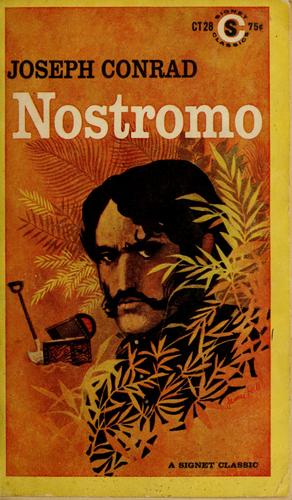
Public domain. Not under copyright: Conrad, Joseph (d. 1924). Everyone credited died more than 50 years ago, outside Pakistan's life-plus-50 term, and Project Gutenberg lists the text as public domain. Newer translations or editions can carry separate rights. Source: Project Gutenberg
Presently the picket at the end of the wharf began to challenge in undertones single figures approaching from the plain. Those messengers sent back from the scouting parties flung to their comrades brief sentences and passed on rapidly, becoming lost in the great motionless mass, to make their report to the Staff. It occurred to Captain Mitchell that his position could become disagreeable and perhaps dangerous, when suddenly, at the head of the jetty, there was a shout of command, a bugle call, followed by a stir and a rattling of arms, and a murmuring noise that ran right up the column. Near by a loud voice directed hurriedly, “Push that railway car out of the way!” At the rush of bare feet to execute the order Captain Mitchell skipped back a pace or two; the car, suddenly impelled by many hands, flew away from him along the rails, and before he knew what had happened he found himself surrounded and seized by his arms and the collar of his coat.
“We have caught a man hiding here, mi teniente!” cried one of his captors.
“Hold him on one side till the rearguard comes along,” answered the voice. The whole column streamed past Captain Mitchell at a run, the thundering noise of their feet dying away suddenly on the shore. His captors held him tightly, disregarding his declaration that he was an Englishman and his loud demands to be taken at once before their commanding officer. Finally he lapsed into dignified silence. With a hollow rumble of wheels on the planks a couple of field guns, dragged by hand, rolled by. Then, after a small body of men had marched past escorting four or five figures which walked in advance, with a jingle of steel scabbards, he felt a tug at his arms, and was ordered to come along. During the passage from the wharf to the Custom House it is to be feared that Captain Mitchell was subjected to certain indignities at the hands of the soldiers--such as jerks, thumps on the neck, forcible application of the butt of a rifle to the small of his back. Their ideas of speed were not in accord with his notion of his dignity. He became flustered, flushed, and helpless. It was as if the world were coming to an end.
The long building was surrounded by troops, which were already piling arms by companies and preparing to pass the night lying on the ground in their ponchos with their sacks under their heads. Corporals moved with swinging lanterns posting sentries all round the walls wherever there was a door or an opening. Sotillo was taking his measures to protect his conquest as if it had indeed contained the treasure. His desire to make his fortune at one audacious stroke of genius had overmastered his reasoning faculties. He would not believe in the possibility of failure; the mere hint of such a thing made his brain reel with rage. Every circumstance pointing to it appeared incredible. The statement of Hirsch, which was so absolutely fatal to his hopes, could by no means be admitted. It is true, too, that Hirsch’s story had been told so incoherently, with such excessive signs of distraction, that it really looked improbable. It was extremely difficult, as the saying is, to make head or tail of it. On the bridge of the steamer, directly after his rescue, Sotillo and his officers, in their impatience and excitement, would not give the wretched man time to collect such few wits as remained to him. He ought to have been quieted, soothed, and reassured, whereas he had been roughly handled, cuffed, shaken, and addressed in menacing tones. His struggles, his wriggles, his attempts to get down on his knees, followed by the most violent efforts to break away, as if he meant incontinently to jump overboard, his shrieks and shrinkings and cowering wild glances had filled them first with amazement, then with a doubt of his genuineness, as men are wont to suspect the sincerity of every great passion. His Spanish, too, became so mixed up with German that the better half of his statements remained incomprehensible. He tried to propitiate them by calling them hochwohlgeboren herren, which in itself sounded suspicious. When admonished sternly not to trifle he repeated his entreaties and protestations of loyalty and innocence again in German, obstinately, because he was not aware in what language he was speaking. His identity, of course, was perfectly known as an inhabitant of Esmeralda, but this made the matter no clearer. As he kept on forgetting Decoud’s name, mixing him up with several other people he had seen in the Casa Gould, it looked as if they all had been in the lighter together; and for a moment Sotillo thought that he had drowned every prominent Ribierist of Sulaco. The improbability of such a thing threw a doubt upon the whole statement. Hirsch was either mad or playing a part--pretending fear and distraction on the spur of the moment to cover the truth. Sotillo’s rapacity, excited to the highest pitch by the prospect of an immense booty, could believe in nothing adverse. This Jew might have been very much frightened by the accident, but he knew where the silver was concealed, and had invented this story, with his Jewish cunning, to put him entirely off the track as to what had been done.
Sotillo had taken up his quarters on the upper floor in a vast apartment with heavy black beams. But there was no ceiling, and the eye lost itself in the darkness under the high pitch of the roof. The thick shutters stood open. On a long table could be seen a large inkstand, some stumpy, inky quill pens, and two square wooden boxes, each holding half a hundred-weight of sand. Sheets of grey coarse official paper bestrewed the floor. It must have been a room occupied by some higher official of the Customs, because a large leathern armchair stood behind the table, with other high-backed chairs scattered about. A net hammock was swung under one of the beams--for the official’s afternoon siesta, no doubt. A couple of candles stuck into tall iron candlesticks gave a dim reddish light. The colonel’s hat, sword, and revolver lay between them, and a couple of his more trusty officers lounged gloomily against the table. The colonel threw himself into the armchair, and a big negro with a sergeant’s stripes on his ragged sleeve, kneeling down, pulled off his boots. Sotillo’s ebony moustache contrasted violently with the livid colouring of his cheeks. His eyes were sombre and as if sunk very far into his head. He seemed exhausted by his perplexities, languid with disappointment; but when the sentry on the landing thrust his head in to announce the arrival of a prisoner, he revived at once.
“Let him be brought in,” he shouted, fiercely.
The door flew open, and Captain Mitchell, bareheaded, his waistcoat open, the bow of his tie under his ear, was hustled into the room.
Sotillo recognized him at once. He could not have hoped for a more precious capture; here was a man who could tell him, if he chose, everything he wished to know--and directly the problem of how best to make him talk to the point presented itself to his mind. The resentment of a foreign nation had no terrors for Sotillo. The might of the whole armed Europe would not have protected Captain Mitchell from insults and ill-usage, so well as the quick reflection of Sotillo that this was an Englishman who would most likely turn obstinate under bad treatment, and become quite unmanageable. At all events, the colonel smoothed the scowl on his brow.
“What! The excellent Senor Mitchell!” he cried, in affected dismay. The pretended anger of his swift advance and of his shout, “Release the caballero at once,” was so effective that the astounded soldiers positively sprang away from their prisoner. Thus suddenly deprived of forcible support, Captain Mitchell reeled as though about to fall. Sotillo took him familiarly under the arm, led him to a chair, waved his hand at the room. “Go out, all of you,” he commanded.
When they had been left alone he stood looking down, irresolute and silent, watching till Captain Mitchell had recovered his power of speech.
Here in his very grasp was one of the men concerned in the removal of the silver. Sotillo’s temperament was of that sort that he experienced an ardent desire to beat him; just as formerly when negotiating with difficulty a loan from the cautious Anzani, his fingers always itched to take the shopkeeper by the throat. As to Captain Mitchell, the suddenness, unexpectedness, and general inconceivableness of this experience had confused his thoughts. Moreover, he was physically out of breath.
“I’ve been knocked down three times between this and the wharf,” he gasped out at last. “Somebody shall be made to pay for this.” He had certainly stumbled more than once, and had been dragged along for some distance before he could regain his stride. With his recovered breath his indignation seemed to madden him. He jumped up, crimson, all his white hair bristling, his eyes glaring vengefully, and shook violently the flaps of his ruined waistcoat before the disconcerted Sotillo. “Look! Those uniformed thieves of yours downstairs have robbed me of my watch.”
The old sailor’s aspect was very threatening. Sotillo saw himself cut off from the table on which his sabre and revolver were lying.
“I demand restitution and apologies,” Mitchell thundered at him, quite beside himself. “From you! Yes, from you!”
For the space of a second or so the colonel stood with a perfectly stony expression of face; then, as Captain Mitchell flung out an arm towards the table as if to snatch up the revolver, Sotillo, with a yell of alarm, bounded to the door and was gone in a flash, slamming it after him. Surprise calmed Captain Mitchell’s fury. Behind the closed door Sotillo shouted on the landing, and there was a great tumult of feet on the wooden staircase.
“Disarm him! Bind him!” the colonel could be heard vociferating.
Captain Mitchell had just the time to glance once at the windows, with three perpendicular bars of iron each and some twenty feet from the ground, as he well knew, before the door flew open and the rush upon him took place. In an incredibly short time he found himself bound with many turns of a hide rope to a high-backed chair, so that his head alone remained free. Not till then did Sotillo, who had been leaning in the doorway trembling visibly, venture again within. The soldiers, picking up from the floor the rifles they had dropped to grapple with the prisoner, filed out of the room. The officers remained leaning on their swords and looking on.
“The watch! the watch!” raved the colonel, pacing to and fro like a tiger in a cage. “Give me that man’s watch.”
Be the first to comment.