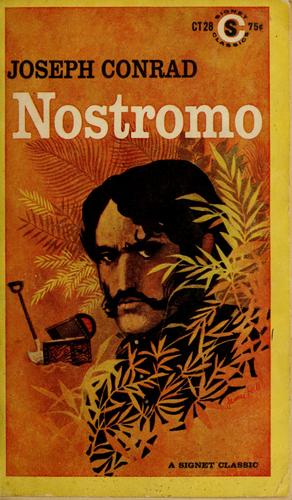
Public domain. Not under copyright: Conrad, Joseph (d. 1924). Everyone credited died more than 50 years ago, outside Pakistan's life-plus-50 term, and Project Gutenberg lists the text as public domain. Newer translations or editions can carry separate rights. Source: Project Gutenberg
It was true, that when searched for arms in the hall downstairs, before being taken into Sotillo’s presence, Captain Mitchell had been relieved of his watch and chain; but at the colonel’s clamour it was produced quickly enough, a corporal bringing it up, carried carefully in the palms of his joined hands. Sotillo snatched it, and pushed the clenched fist from which it dangled close to Captain Mitchell’s face.
“Now then! You arrogant Englishman! You dare to call the soldiers of the army thieves! Behold your watch.”
He flourished his fist as if aiming blows at the prisoner’s nose. Captain Mitchell, helpless as a swathed infant, looked anxiously at the sixty-guinea gold half-chronometer, presented to him years ago by a Committee of Underwriters for saving a ship from total loss by fire. Sotillo, too, seemed to perceive its valuable appearance. He became silent suddenly, stepped aside to the table, and began a careful examination in the light of the candles. He had never seen anything so fine. His officers closed in and craned their necks behind his back.
He became so interested that for an instant he forgot his precious prisoner. There is always something childish in the rapacity of the passionate, clear-minded, Southern races, wanting in the misty idealism of the Northerners, who at the smallest encouragement dream of nothing less than the conquest of the earth. Sotillo was fond of jewels, gold trinkets, of personal adornment. After a moment he turned about, and with a commanding gesture made all his officers fall back. He laid down the watch on the table, then, negligently, pushed his hat over it.
“Ha!” he began, going up very close to the chair. “You dare call my valiant soldiers of the Esmeralda regiment, thieves. You dare! What impudence! You foreigners come here to rob our country of its wealth. You never have enough! Your audacity knows no bounds.”
He looked towards the officers, amongst whom there was an approving murmur. The older major was moved to declare--
“Si, mi colonel. They are all traitors.”
“I shall say nothing,” continued Sotillo, fixing the motionless and powerless Mitchell with an angry but uneasy stare. “I shall say nothing of your treacherous attempt to get possession of my revolver to shoot me while I was trying to treat you with consideration you did not deserve. You have forfeited your life. Your only hope is in my clemency.”
He watched for the effect of his words, but there was no obvious sign of fear on Captain Mitchell’s face. His white hair was full of dust, which covered also the rest of his helpless person. As if he had heard nothing, he twitched an eyebrow to get rid of a bit of straw which hung amongst the hairs.
Sotillo advanced one leg and put his arms akimbo. “It is you, Mitchell,” he said, emphatically, “who are the thief, not my soldiers!” He pointed at his prisoner a forefinger with a long, almond-shaped nail. “Where is the silver of the San Tome mine? I ask you, Mitchell, where is the silver that was deposited in this Custom House? Answer me that! You stole it. You were a party to stealing it. It was stolen from the Government. Aha! you think I do not know what I say; but I am up to your foreign tricks. It is gone, the silver! No? Gone in one of your lanchas, you miserable man! How dared you?”
This time he produced his effect. “How on earth could Sotillo know that?” thought Mitchell. His head, the only part of his body that could move, betrayed his surprise by a sudden jerk.
“Ha! you tremble,” Sotillo shouted, suddenly. “It is a conspiracy. It is a crime against the State. Did you not know that the silver belongs to the Republic till the Government claims are satisfied? Where is it? Where have you hidden it, you miserable thief?”
At this question Captain Mitchell’s sinking spirits revived. In whatever incomprehensible manner Sotillo had already got his information about the lighter, he had not captured it. That was clear. In his outraged heart, Captain Mitchell had resolved that nothing would induce him to say a word while he remained so disgracefully bound, but his desire to help the escape of the silver made him depart from this resolution. His wits were very much at work. He detected in Sotillo a certain air of doubt, of irresolution.
“That man,” he said to himself, “is not certain of what he advances.” For all his pomposity in social intercourse, Captain Mitchell could meet the realities of life in a resolute and ready spirit. Now he had got over the first shock of the abominable treatment he was cool and collected enough. The immense contempt he felt for Sotillo steadied him, and he said oracularly, “No doubt it is well concealed by this time.”
Sotillo, too, had time to cool down. “Muy bien, Mitchell,” he said in a cold and threatening manner. “But can you produce the Government receipt for the royalty and the Custom House permit of embarkation, hey? Can you? No. Then the silver has been removed illegally, and the guilty shall be made to suffer, unless it is produced within five days from this.” He gave orders for the prisoner to be unbound and locked up in one of the smaller rooms downstairs. He walked about the room, moody and silent, till Captain Mitchell, with each of his arms held by a couple of men, stood up, shook himself, and stamped his feet.
“How did you like to be tied up, Mitchell?” he asked, derisively.
“It is the most incredible, abominable use of power!” Captain Mitchell declared in a loud voice. “And whatever your purpose, you shall gain nothing from it, I can promise you.”
The tall colonel, livid, with his coal-black ringlets and moustache, crouched, as it were, to look into the eyes of the short, thick-set, red-faced prisoner with rumpled white hair.
“That we shall see. You shall know my power a little better when I tie you up to a potalon outside in the sun for a whole day.” He drew himself up haughtily, and made a sign for Captain Mitchell to be led away.
“What about my watch?” cried Captain Mitchell, hanging back from the efforts of the men pulling him towards the door.
Sotillo turned to his officers. “No! But only listen to this picaro, caballeros,” he pronounced with affected scorn, and was answered by a chorus of derisive laughter. “He demands his watch!” . . . He ran up again to Captain Mitchell, for the desire to relieve his feelings by inflicting blows and pain upon this Englishman was very strong within him. “Your watch! You are a prisoner in war time, Mitchell! In war time! You have no rights and no property! Caramba! The very breath in your body belongs to me. Remember that.”
“Bosh!” said Captain Mitchell, concealing a disagreeable impression.
Down below, in a great hall, with the earthen floor and with a tall mound thrown up by white ants in a corner, the soldiers had kindled a small fire with broken chairs and tables near the arched gateway, through which the faint murmur of the harbour waters on the beach could be heard. While Captain Mitchell was being led down the staircase, an officer passed him, running up to report to Sotillo the capture of more prisoners. A lot of smoke hung about in the vast gloomy place, the fire crackled, and, as if through a haze, Captain Mitchell made out, surrounded by short soldiers with fixed bayonets, the heads of three tall prisoners--the doctor, the engineer-in-chief, and the white leonine mane of old Viola, who stood half-turned away from the others with his chin on his breast and his arms crossed. Mitchell’s astonishment knew no bounds. He cried out; the other two exclaimed also. But he hurried on, diagonally, across the big cavern-like hall. Lots of thoughts, surmises, hints of caution, and so on, crowded his head to distraction.
“Is he actually keeping you?” shouted the chief engineer, whose single eyeglass glittered in the firelight.
An officer from the top of the stairs was shouting urgently, “Bring them all up--all three.”
In the clamour of voices and the rattle of arms, Captain Mitchell made himself heard imperfectly: “By heavens! the fellow has stolen my watch.”
The engineer-in-chief on the staircase resisted the pressure long enough to shout, “What? What did you say?”
“My chronometer!” Captain Mitchell yelled violently at the very moment of being thrust head foremost through a small door into a sort of cell, perfectly black, and so narrow that he fetched up against the opposite wall. The door had been instantly slammed. He knew where they had put him. This was the strong room of the Custom House, whence the silver had been removed only a few hours earlier. It was almost as narrow as a corridor, with a small square aperture, barred by a heavy grating, at the distant end. Captain Mitchell staggered for a few steps, then sat down on the earthen floor with his back to the wall. Nothing, not even a gleam of light from anywhere, interfered with Captain Mitchell’s meditation. He did some hard but not very extensive thinking. It was not of a gloomy cast. The old sailor, with all his small weaknesses and absurdities, was constitutionally incapable of entertaining for any length of time a fear of his personal safety. It was not so much firmness of soul as the lack of a certain kind of imagination--the kind whose undue development caused intense suffering to Senor Hirsch; that sort of imagination which adds the blind terror of bodily suffering and of death, envisaged as an accident to the body alone, strictly--to all the other apprehensions on which the sense of one’s existence is based. Unfortunately, Captain Mitchell had not much penetration of any kind; characteristic, illuminating trifles of expression, action, or movement, escaped him completely. He was too pompously and innocently aware of his own existence to observe that of others. For instance, he could not believe that Sotillo had been really afraid of him, and this simply because it would never have entered into his head to shoot any one except in the most pressing case of self-defence. Anybody could see he was not a murdering kind of man, he reflected quite gravely. Then why this preposterous and insulting charge? he asked himself. But his thoughts mainly clung around the astounding and unanswerable question: How the devil the fellow got to know that the silver had gone off in the lighter? It was obvious that he had not captured it. And, obviously, he could not have captured it! In this last conclusion Captain Mitchell was misled by the assumption drawn from his observation of the weather during his long vigil on the wharf. He thought that there had been much more wind than usual that night in the gulf; whereas, as a matter of fact, the reverse was the case.
Be the first to comment.